



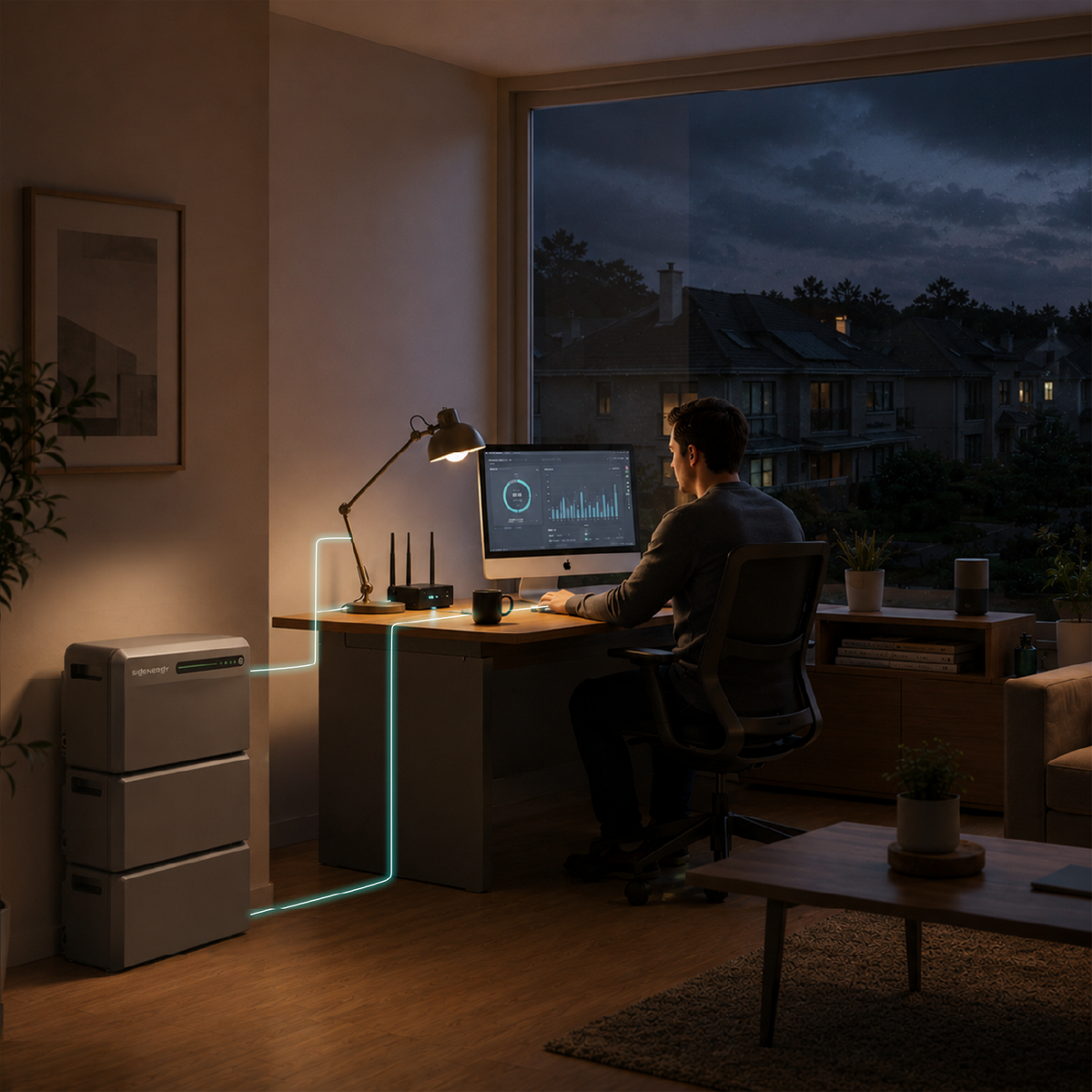
Quick answer: A home battery does not automatically provide backup power. What works during an outage depends on the system’s backup output, power limit, remaining charge and electrical installation.
A battery does not automatically mean backup power
A battery can be fully charged and still supply no power to your home during a grid outage if it only operates in a normal grid-connected configuration. Grid-connected inverters must avoid unintentionally energising the public grid while technicians are working on it.
Three common backup architectures
1. No backup
The battery stops supplying household power when the grid fails.
2. Dedicated backup outlet
A separate backup outlet or off-grid port supplies selected appliances. This is simpler than powering the entire home.
3. Backup circuit or whole-home backup
Selected circuits—or, with a suitable system, a larger part of the home—can be supplied through additional switching and electrical design. This requires more installation planning.
What should you check?
- Does the system support backup?
- Which output remains active during an outage?
- What are the continuous and peak backup power limits?
- Is transfer automatic?
- Can you reserve energy for backup?
- Can solar panels charge the battery during an outage?
- Is additional equipment or an electrician required?
Why power matters as much as capacity
A 5 kWh battery could theoretically supply a 1 kW load for five hours or a 2 kW load for 2.5 hours, before accounting for losses and usable-capacity limits. Higher loads shorten the duration. The inverter must also support the instantaneous power demand.
A kettle, hob, heater and washing machine running together can exceed a small backup output even when energy remains in the battery.
Prioritise essential loads
- Fridge or freezer
- Router and communication equipment
- Lighting
- Laptops and phone charging
- Selected household equipment within the supported power limit
Keeping all high-power appliances running requires a larger backup system. Define which essential appliances you want to support before choosing your system.
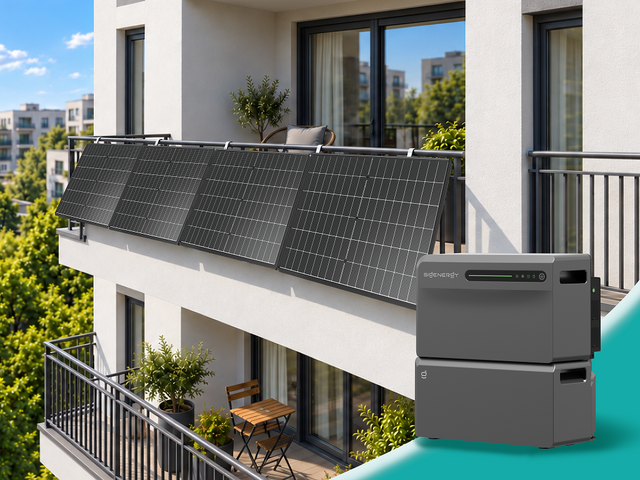
Our recommendation: SigenMate 2700 Ultra
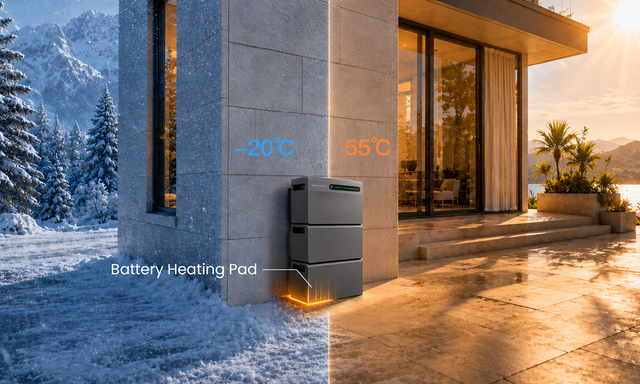
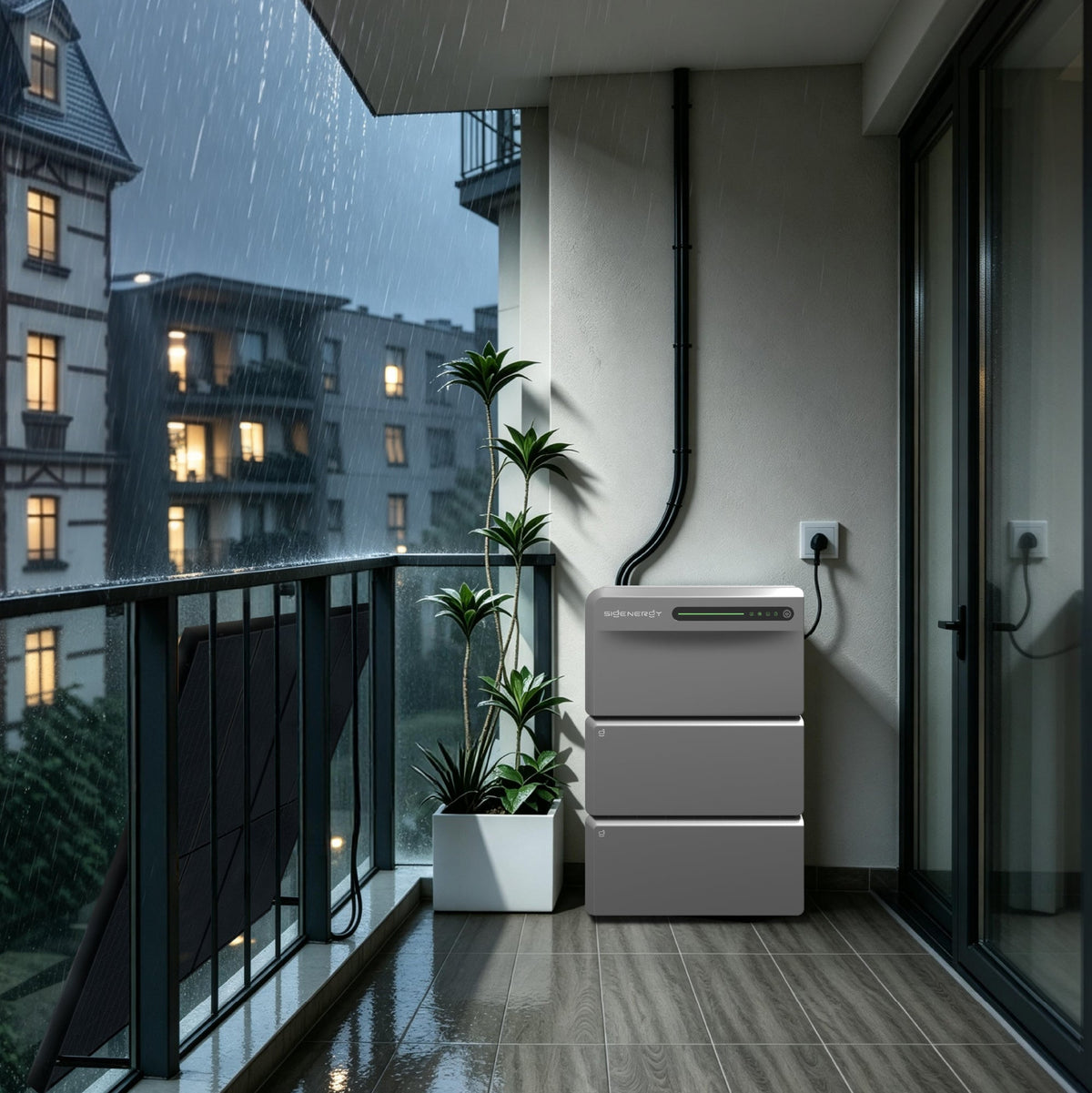
The SigenMate 2700 Ultra is designed to keep essential appliances running during a grid outage. Its backup function switches to off-grid operation with a 0 ms transfer time for devices connected to its two AC backup outlets.
For one unit, keep connected backup loads within 1,400 W continuous output. Two units in a supported parallel configuration provide up to 2,800 W; three provide up to 3,600 W. Backup duration depends on the remaining battery charge and appliance load.
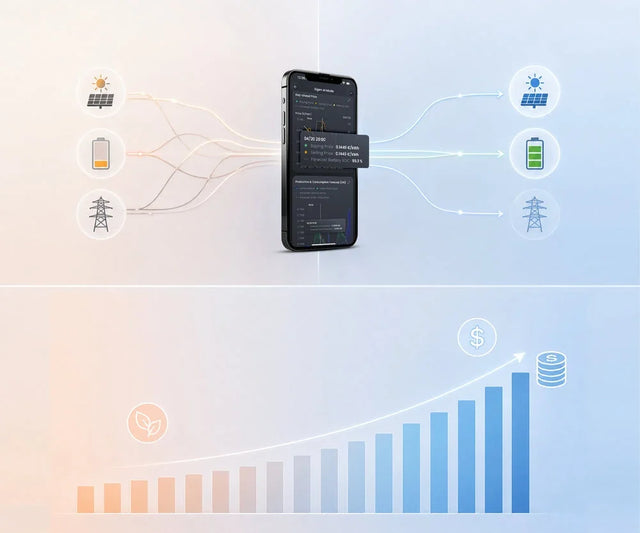
The Backup Reserve setting in the mySigen App lets you retain battery energy for outages. A backup socket does not automatically power the home's normal sockets or all household circuits. Follow the installation instructions for your configuration.
Further reading
- How much home battery capacity do you need for solar panels?
- Plug-in vs fixed home battery: what should you compare?
- Solar self-consumption and home storage guide

Leave a comment
This site is protected by hCaptcha and the hCaptcha Privacy Policy and Terms of Service apply.