



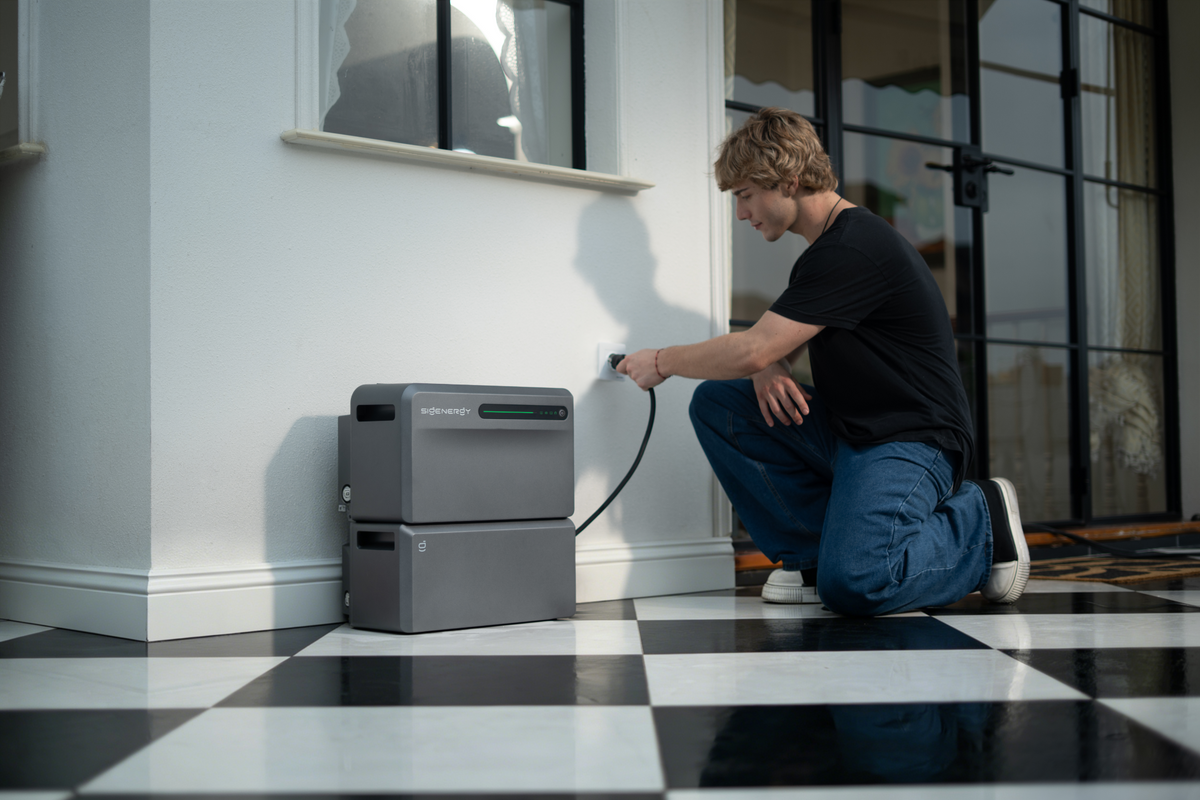
Quick answer: Size a home battery around recurring daytime solar surplus and evening or overnight consumption, not just the number of panels. Check usable capacity, charge/discharge power, efficiency and any backup reserve before choosing a system.
Bigger is not automatically better
Battery capacity is expressed in kilowatt-hours (kWh): how much energy the battery can store. A larger number may sound better, but an oversized battery can remain underused. The useful target is capacity that matches your recurring energy flow.
Start with your solar surplus
Look at how much electricity your panels export on a normal sunny day. If they produce 18 kWh, your home uses 8 kWh during solar hours and exports 10 kWh, that exported energy is the theoretical pool available for storage. This is an illustrative example, not a SigenMate performance forecast.
Do not automatically choose a 10 kWh battery: first check how much electricity you need later.
Then look at evening and overnight demand
If your home only uses 4 kWh after sunset, storing 10 kWh every afternoon may add little value. An EV, heat pump, electric cooking or other evening loads may increase demand.
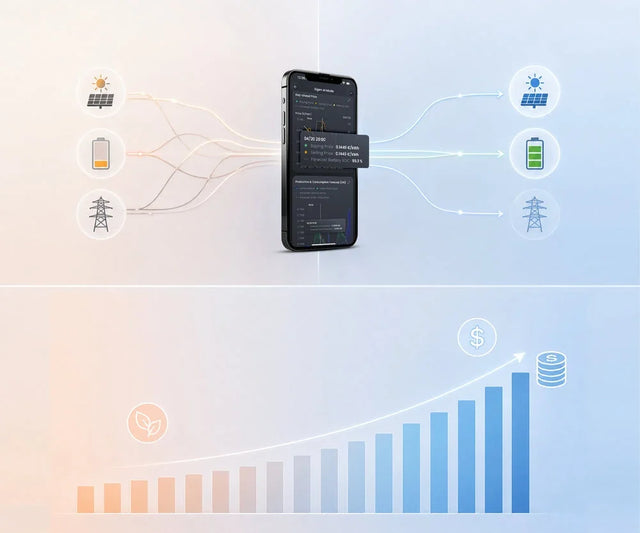
Typical daytime surplus → usable battery capacity → later household demand.
Seasonal differences matter
Dutch solar production varies considerably by season. A battery that cycles regularly in spring and summer may receive little solar energy during dark winter periods. Choosing capacity from the best day in June can overstate your needs for much of the year.
Power and energy are different
Capacity in kWh describes stored energy. Power in kW describes how quickly the system can charge or discharge. Enough stored energy does not mean a battery can run several large appliances simultaneously. Compare both figures.
Modular expansion can reduce sizing risk
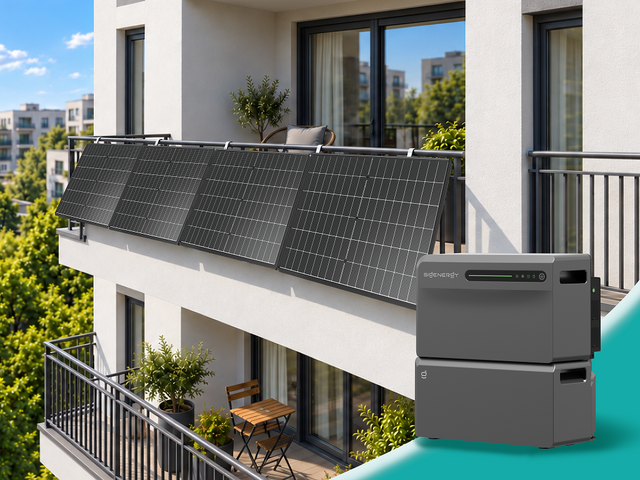
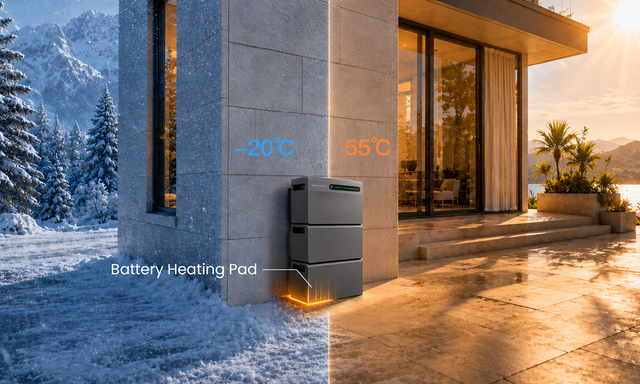
Starting smaller and expanding later may help if you plan to add an EV, heat pump or more panels. SigenMate 2700 Ultra starts with 2.688 kWh of nominal capacity. Each main unit supports up to six BAT 2700 expansion batteries, reaching approximately 18.8 kWh per stack. Up to three main units can be connected using the supported AC parallel configuration, reaching approximately 56.4 kWh when fully expanded.
These are nominal storage values, not usable energy. Expansion requires the supported equipment and installation described in the manual.
Compare bundles with one or two expansion batteries, or start with a main unit and add BAT 2700 expansion batteries as your needs grow.
A simple sizing framework
- Measure typical daily PV export across several spring and summer days.
- Measure grid electricity bought between late afternoon and morning.
- Use the smaller of those two amounts as an initial energy-flow reference, not a final battery specification.
- Account for charging losses, usable capacity and any backup reserve.
- Check charge/discharge power as well as kWh.
- Consider future loads without paying for capacity you may never use.
For example, a low-load household should focus on repeatable evening demand; a family should include cooking and appliance schedules; a home with an EV or heat pump should also check simultaneous power demand. Use your measured data rather than generic household-size assumptions.
Try the SigenMate calculator on the product page to explore a recommended bundle and estimated savings. Calculator results depend on assumptions and are not a guaranteed return.
What changes after 2027?
Dutch net metering ends on 1 January 2027. Using more solar electricity yourself becomes more relevant, but a battery still needs an individual assessment. Consider purchase and installation cost, tariffs, export compensation, efficiency and actual usage.
Choose the installation architecture too
Capacity is only part of the decision. Read our plug-in vs fixed home-battery comparison for installation, solar compatibility, backup and smart control.
Sources
- Rijksoverheid: net metering ends in 2027
- SigenMate 2700 Ultra specifications and calculator
- SigenMate Series user manual
Worked example — assumptions, not a product forecast
Turn measured demand into a sizing decision
Suppose your meter shows 8 kWh of daytime export and 4 kWh of evening and overnight consumption. The smaller flow is 4 kWh. That is an initial energy reference, not a recommendation to buy a battery labelled 4 kWh.
If 90% of solar energy charged into storage reaches household loads, delivering 4 kWh would require about 4.44 kWh of charging energy (4 ÷ 0.90). This efficiency is an example assumption, not a SigenMate specification. It does not directly determine nominal battery capacity: check usable capacity, operating reserve, charge/discharge losses, power limits and the actual timing of demand.
Repeat the calculation over representative days and seasons. Select capacity that cycles regularly instead of sizing from the single highest-export day.
Questions before you choose storage
Can I choose battery capacity from the number of solar panels?
Panel count alone is insufficient. Use measured solar export and later household demand, then check usable kWh, charge/discharge power, efficiency and reserve settings.
What is the difference between nominal and usable capacity?
Nominal capacity is the rated storage figure. Usable capacity is the energy available within the supported operating range; a backup reserve can reduce what is available for daily use. Check the manufacturer specification rather than treating these values as identical.
Does more capacity let me run more appliances at once?
Not necessarily. kWh measures stored energy; kW measures power. Simultaneous appliance operation depends on continuous output, starting loads, the connection and any backup socket or circuit limits.
Independent guidance: home batteries and solar self-consumption
Sources checked: 4 October 2026 · Sigenergy Team


Leave a comment
This site is protected by hCaptcha and the hCaptcha Privacy Policy and Terms of Service apply.